The oral exam (which always makes me think of a dentist appointment) for which I have been preparing for the better part of year did not go so well today. My committee politely asked me to do it over again. I wanted to say "No." Instead I smiled and and nodded.
May 30, 2006

May 28, 2006
Review of The Proposition.
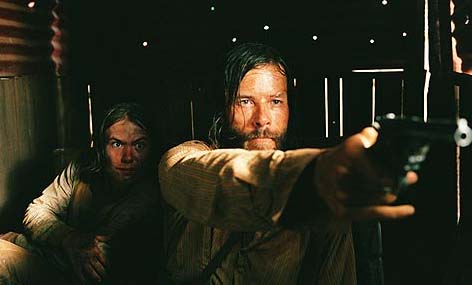
I found myself wishing that I was the group of chatty 50-something yuppies (this coming from a 20-something embryonic yuppie) sitting behind me who didn't know who Alex and AJ nor Raven Simone were during the pre-film slideshow and probably don't know who Nick Cave is or that he sings his way through the soundtrack of the movie he wrote. Just knowing that Mr. Cave has released albums with titles like Murder Ballads made the whole get up that is The Proposition seem too...gotten up. This movie veers between a kind of post-modern realism (viscous blood and sweat stained blouses abound) with an equally post-modern sense of what constitutes myth (but what Jameson just called the post-modern's propensity to surface). This movie just has no real sense of time or place. Two things that drove me crazy was the inconsistent characterization of the captain and the botched reference to Origin of Species (it wasn't until Descent of Man some 10 years after OofS that Darwin dared advance his theories of human evolution). If you like your violence crunchy and slurpy then you might not mind this film. And if you have been in a cave that isn't named Nick, then you might feel a bit more unbiased than I did.
May 27, 2006
the world's awake
One of the brilliant things about living in a place where spring actually announces itself in all of its ambivalence is that when the sun finally does cut through the April showers the world really seems to come alive. I have seen more people today walking around on the streets. People are just strolling about, taking the world in. It is a very infectious thing to watch. Unfortunately, I am on the wrong side of life, sitting in the cafe. The even crueler irony is that I am taking notes on Blake and Wordsworth. These poets both demand having some kind of sensuous contact with the world. So, I must stay in-doors for now and just let the infant world throb in its spring time joy.
May 26, 2006
funny cover

Slate has a nice photo gallery of literary classics given pulp covers in the 1950s. Being a Victorianist, my favorite, of course, is the cover for Jane Eyre. Who knew that Rochester was really Johnny Cash? Rochester--he walked the line.
May 24, 2006
u-plate
I made a really good playlist recently. The consequence of this action has been that I am staying up late again playing the first two levels of this puzzle game called Cubis over and over. Some highlights of this list include: Once Bitten Twice Shy by Ian Hunter (this is the original that Great White covered) who was once part of the great Mott the Hoople; Shake Appeal by Iggy and the Stooges (this song really makes you want to...shake); Killing of a Flash Boy by Suede ("All the white kids shuffle to the heavy metal stutter"; is there a better first line that that? what about the line, "Shaking obscene like killing machines here we go"); Baby Boomerang by TRex ("New York witch in the dungeon of the day / I'm trying to write my novel / And all you do is play/ Baby Boomerang") and the White Stripe's cover of Stop Breaking Down (the Rolling Stone's version from Exile on Main Street is pretty great too). So piping music directly into my brain is keep me up-late at nights.
May 17, 2006
da vinci code
I'm usually not one to go in for the "conspiracy theory" style of cultural criticism. So the point I want to make isn't really of the "conspiracy" variety. Nonetheless I was reading this morning about the critical backlash against the Da Vinci Code now that it has been screened at Cannes. Now I was tempted to think that this is just the standard fare of critical cultural elitism attacking a low-brow book being made into a positively surley browed movie. A critic on the BBC points out how the movie is cloaked in armor due the popularity of the books (videogame culture has a great term for this phenomenon: "fanboy"). Certainly the movie would seem to occasion a kind of critical muscle flexing, allowing critics to vent their anger at the culture industry against a product whose revenues won't really suffer because of it (and of course there is no escape from this perverse loop). But then I as I thought about it I think these negative reviews are actually something much more savvy. In a way they are a rearguard action against the film's protestors. It is as if these critics as saying, "This is just a cheap piece of lowbrow entertainment with no serious message. You are allowed to go enjoy it without any concern regarding the content." So, really these critics are forming a protective armor of their own around the movie. Well, I at least feel relieved that I can go enjoy the film without any higher imperatives bearing down on me.
April 28, 2006
satire
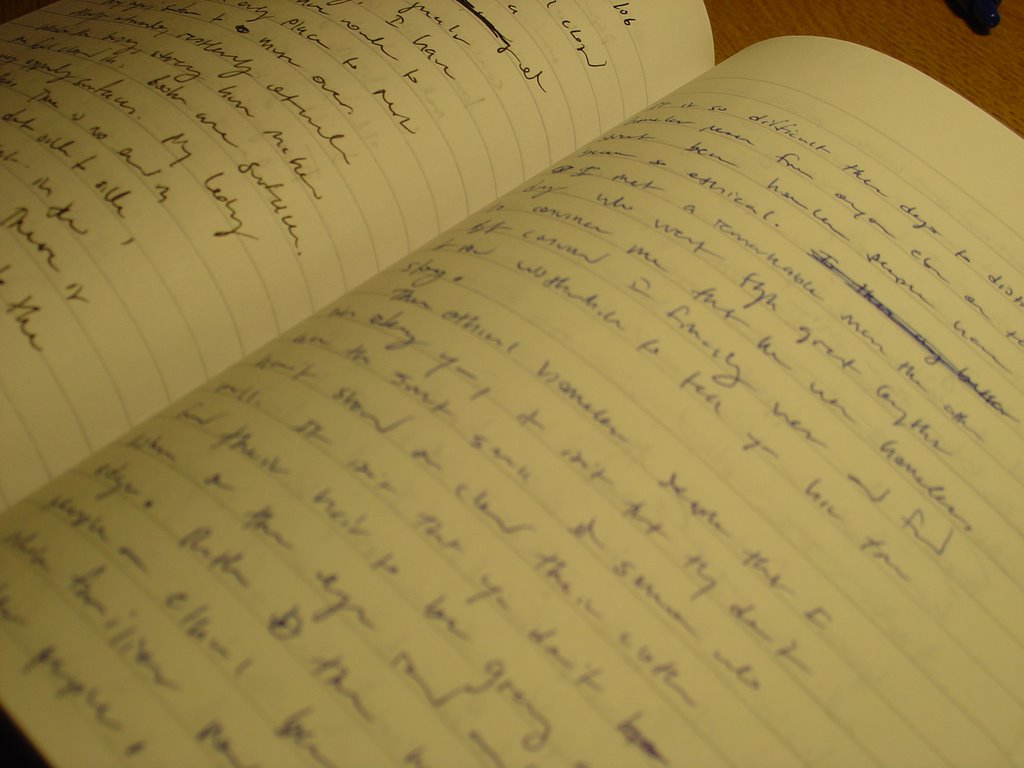
I cut my teeth as a literature reading junior on William S. Burroughs. Burroughs was, among other things, a great writer of satire. His satire always creeped up in these oblique quasi-parable/allegories. In any case, my writing notebook has been laying on my floor for the last few weeks by my chair. I was reading Society of the Spectacle last night when I picked the notebook up and wrote down what amounted to "Homeless people are so ethical today." The gag of what I wrote was that the story had nothing to do with homeless people in the conventional sense at all. Rather it was a satire about a family who would rather be homeless than live in the house built for them by "illegial aliens." I really wanted to write something about this email forward my wife received from her friend who sends (from our perspective, well maybe from any perspective) questionable email forwards. I've also been turning over the beer story in my mind. But more on that some other time. I may put the story up here since it is not that long. By the end of writing it, however, I felt very ambivalent about it. You see (always beware a sentence beginning with "you see") the point would seem to be that this family's act of "resistance" was harmful, even ridiculous. I tried to show how these people so clearly misperceived their situation. But what situation? I found this hard to define. This reading would represent the kind of entropic movement that most satire (I think) exhibits. But in another way what the story (which of course you can't read right now) laments is how far fetched it is that anyone would actually go to such lengths to resist something. Well, these are just things that are on my mind when I should be doing things like, oh, studying for oral exams and so on...
April 26, 2006
laffy taffy
I'm feeling quite bad about myself at the moment. I've stayed up too late wasting time. Tonight was the first Italian class taken in preparation for the summer trip to Italy. This has made my day into a 12 hour learning extravaganza. I know that I am going to be tired tomorrow. I called and cancelled my doctors appointment in the morning because the thought or huffing up and down Chicago Ave. all day fills me with horror. Meanwhile, there is a backlog of reading piling up for Friday. Least of this reading includes the gazillion poems that I am supposed to have read in order to teach them. Also, my prof for Afterlife of Marxism suggested an extra session for grad students (even though it became an open invitation) for which we are supposed to read Society of the Spectacle. Now this little treatise is quite complicated because it is so enigmatic. It deals with the organization of the economy and society into images that produce or incite desire. There is a somewhat well known French philosopher coming to campus. This requires reading as well. There is no worse feeling that staring dumbly at the people sitting around you at a talk hoping they have hung on to a thread of the paper long enough to say something. All of these pressures have to do with the pressure I am putting on myself to "professionalize." This basically refers to the process of turning your will into laffy taffy (not the rump shaking kind though). There are stupid jokes involved in this process. Basically it means running around campus and sitting in ill lit corners of the university frantically reading materials that are too dense to be read with your back up against the wall (this reminds me of an article in the Times I saw about Airbus' plans for standing room only seats on planes: instead of groundlings of the old theatres I guess they'll have to be called "airlings." Why don't they just develop enormous ziplock bags and sling shots and just hurl people across time and space?). Oh and I'm supposed to be studying for oral exams. Right now I'm racing through Woman in White by Collins. Its a lovely novel (fortunately I read it before). But now that I've learned my committee is going to be comprised of two profs I barely know and one who has a disarming propensity to be simultaneously hot and cold. Needless to say, I'm a bit concerned. Everyone says that I will do fine on the exams. Surely I will. I have experience since January, however, a recurrent feeling that I cannot retain information in my brain. It is as if some thrifty shop mechanic went into my skull with a diamond bladed grinder and just made my brain resemble the chicago bean. (Note: I realize that link is a bit overkill in so far as it is meant to show/reveal what the bean is, but I digress...). BAsically, my complaint boils down to the genre of the "grad student's lament." There is nothing new to this. Only now it is my turn to be jostled down the gauntlet of self-doubt, inscrutable demands, and pressure.
April 19, 2006
Multitude
I often find myself overwhelmed by the sheer multitudes of people I encounter whilst scanning the internet. I particularly find flickr unnerving. How does one account for the multiplicity and plurality of bodies and moments and places? I guess this is a case of digital voyeurism gone bad (Zizek says that no real encounters can take place in cyberspace, hence the slogan that appears on my cell phone "No sex please we're digital"). After all what could be more unsettling than to think that you are leisurely peering into the intimate recesses of some stranger's existence only to find yourself confronting the meaningless facticity of your own life?
April 12, 2006
Paradise unread
I should be reading Paradise Lost right now. Instead I am distracting myself on the computer. I have been trying to break this habit of late. I have been mostly successful. It is astonishing how much interest one can take in the flat surface of the internet. I never really learn anything interesting online. The internet really is a non-event. A perpetual revolution of the same. Yet I still stare away. Back in the pre-Internet days I used to spend many hours reading my CD-ROM Encarta encyclopedia (of course I used to spend many hours reading, writing, and making mix tape covers, ie I used my time creatively). Then, at least, I learned something. The internet is sometimes just too hyperactive for my already hyperactive state of mind. In any case, I have been listening to an excellent album, Suicide's 1977 eponymous debut. I have known about this album since high school. At that time I purchased the excellently titled album, Some Girls Wander by Mistake, a collection of early singles and B-sides by the Sisters of Mercy. Andrew Eldritch mentions in the liner notes being enamoured with Suicide. Now, Denver had/has a great record store downtown called Waxtrax (many a weekend pilgrimage on the 0 bus that shot down Broadway were made to Waxtrax in those days. During the summer, I would ride with mom to her job, pick up the bus and spend the day downtown, going into thrift stores, sitting at the Market (back in those days the cafe was split into two halves, one smoking and the other non-smoking), walking around alleyways; quite fantastic days those were). You just couldn't find Suicide albums back then (or at least I couldn't and that was before Amazon etc. I often feel that pop culture became too hyper-intense with the internet, no longer does one have the thrill of the collector upon the experience "stumbling" upon something, even though I have the nifty "Stumble-Upon" plug-in installed on my computer). In any case, Mute re-released the album in 2000 (who has populated by collection of CDs with everything from Throbbing Gristle to Einsturzende Neubauten (yes, I was an industrial-head back in the day). Anyhoo, the Suicide album is very nice, a kind of affect-less sublime sort of affair (work out the paradox).
April 09, 2006
The limit
I know that I have reached my limit when I begin dreaming up projects, particularly when I am reading. I spent a good part of last night reading Paradise Lost thinking about an idea for a website called "Learninglists." See, in another class (ie not the Milton one), we are reading bits from Deleuze's Cinema I and II. Deleuze has interesting things to say about Westerns, particularly how they take place in a milieu and how they involve binomials: structures of anticipating the other and so on. I've also been quite obsessed with Joss Wheedon's amazing (now defunct, damn you Fox!) TV show, Firefly which has much to do with Westerns. So, I have the thought: I would like to learn about Westerns. But how? You see reading a book about it would be fine, but books are often argumentative (presenting a certain position in relation to other positions) rather than pedagogical (presenting how one arrives at certain positions and why). I want a list of 5-10 excellent Westerns that exhibit some kind of formal or thematic development and ruminate on them. Where does one find such a list? Enter my idea. A website with various "tutorials" or "learning exercises" in form of lists of whatever (books, movies, and so on) with accompanying commentary, pointing out key features, posing questions and so on.
I also find that when I have hit my intake threshold for information, I begin to daydream about writing. Of course, I often find when I read new theory (Deleuze) I work through it by imagining it in terms of characters and stories (this probably makes me a better creative writer than critic). In any case, I have often thought that since I cannot complete my "Cora" novel, also known as "Hudson" I should just start scanning every scrap of paper that has gone into making it over the last 5-6 years and just put on-line. I don't know what good this would do other than constitute an archive of failure. I also think about my "zeppelin" story that I have been ruminating over for a few years now. Unfortunatley, the more pressing task at hand is to interpolate Bleak House, read Paradise Lost and Mille Plateaux, and not lose my mind...
I also find that when I have hit my intake threshold for information, I begin to daydream about writing. Of course, I often find when I read new theory (Deleuze) I work through it by imagining it in terms of characters and stories (this probably makes me a better creative writer than critic). In any case, I have often thought that since I cannot complete my "Cora" novel, also known as "Hudson" I should just start scanning every scrap of paper that has gone into making it over the last 5-6 years and just put on-line. I don't know what good this would do other than constitute an archive of failure. I also think about my "zeppelin" story that I have been ruminating over for a few years now. Unfortunatley, the more pressing task at hand is to interpolate Bleak House, read Paradise Lost and Mille Plateaux, and not lose my mind...
April 02, 2006
Vanitas Vanitatum
I have expended much paranoid energy on my preparation for the oral exams at the end of May. I constantly, restlessly, examine myself. Endlessly, I wonder if I am preparing the right material, thinking the right thoughts. What makes academic work so painful and frustrating though, is the way it is always motivated by a negation of the negation. You come to realize that the moments of harrowing despair and desolation, far from proving that you are doing it wrong, actually means you are doing it right. Alas, you cannot outwit the cunning of reason. Oh, vanitas vanitatum!
March 25, 2006
The dilapidated wreck of the future...
The name of my blog (or my name as a blogger which ever it may be) contains an irony that I feel requires thinking about at this current moment. In the west (including the midwest) one often sees dilapitated wrecks of houses and barns and other outlier structures of old homesteads and settlements being reclaimed by time. These "prairiebuildings" patiently await their destruction, outscaling the human time in which they were built. I always wonder why these buildings aren't torn down, why not circumvent this painful, protracted disintegration. Leaving them up seems like such an odd capitulation to the forces of nature in light of the savage energies of civilzation that have gone into to denying these very forces. These prairiebuildings were built in the process of "prairiebuilding," rendering the radical changes and alterations to the landscape, a great leap forward from one state into another. And yet through the destruction of those same buildings, another kind of "prairiebuilding" begins, a clearing and renewal that no one person's eyes can witness and of which I only catch fractions as a bystander swerving by in a strand of time.
I opened up my blog tonight to write about, as I never do, thoughts of a personal nature about the deconstituted, unconstructed state of my own (inner) life right now. I feel plagued by the question: How do I begin to build the person that I will become? Where does one find the resources within oneself to create what does not yet exist? The title of my blog seized me in that midst of these reflections. I am both inert and decaying and yet full of potential energy that is already undone in that inertia towards which it seems destined. The attraction that I feel to this ambivalent "word" surely indicates this. I feel that in a moment I have been built, torn down, and reclaimed by some other emerging process. Imploding, effacing, yet with premeditated spontaneity. Underlying all of this is that same paradoxical disavowal that leaves a building to sit and fold in on itself. I am negligent and progressive and destructive and creative all at once.
How to clear a space and build in that space without the blank behind the space taking revenge on that clearing with undoing. That is my dilemma.
I opened up my blog tonight to write about, as I never do, thoughts of a personal nature about the deconstituted, unconstructed state of my own (inner) life right now. I feel plagued by the question: How do I begin to build the person that I will become? Where does one find the resources within oneself to create what does not yet exist? The title of my blog seized me in that midst of these reflections. I am both inert and decaying and yet full of potential energy that is already undone in that inertia towards which it seems destined. The attraction that I feel to this ambivalent "word" surely indicates this. I feel that in a moment I have been built, torn down, and reclaimed by some other emerging process. Imploding, effacing, yet with premeditated spontaneity. Underlying all of this is that same paradoxical disavowal that leaves a building to sit and fold in on itself. I am negligent and progressive and destructive and creative all at once.
How to clear a space and build in that space without the blank behind the space taking revenge on that clearing with undoing. That is my dilemma.
November 06, 2005
A nervous wiry woman
A wiry nervous woman in a long purple jacket paces outside on the sidewalk smoking a cigarette. She hold the cigarette with long outstretched fingers which gives her the look of performing a very delicate procedure. She wears a large black hat with the short brim turned up in the front and the back. The hat has a deep bucket shape and reminds me a hat that a woman in the late 1910s would wear. The front of the hat sits so low on her head that it sits perched on her glasses. The glasses--in turn--sit slipped down on her nose, forcing her to peer downwards in order to see anything. She turns her head roundly on her neck, peering down through the glasses to look around. The lenses look cloudy and smudged by careless fingers so carefully smoking. She doesn't seem to have any eyes just a thin pale mouth. She is a all hat, most, and nervous rigid fingers.
With her long sharp nose that protrudes from her face and her tendency to see the world with a stooped head, the woman looks like a mole. Only she is a mole who is too nervous to dip down in the ground again. Instead she sits above ground in the dim light of a rainy afternoon biting at her fingernails. Her right knee is propped up on the left one and bobs up and down relentlessly. She stares at the table, sips her coffee, bobs her knee, looks up, then tilts her head back in a desperate gulping action, as if she still has dirt caught in her throat from her last reluctant underground foray.
She talks to herself outside when she smokes. She cuts the air in half with a stiff arm that sweeps downwards and stops in front of her. It is a decisive gesture. An emphatic stopgap against some plea to go back underground. She holds the hand there. Mutters something. The cigarette smoke becoming air around her. The point is made. The rigid fingers return to butt end of the cigarette to her mouth.
With her large hat and nervous manner, she reminds me of a suffragette, ready to blow up a mailbox for her cause. Only this woman is possessed by demons who gurgle up from underground and take on an ambiguous shade of concrete. They are so unseen and no amount of staring will see them out. And she will not go back underground. She's been choking on clods ever since. Now she has blown down the block; though I see her pause making one last emphatic gesture before the voices pull her underground again against her will.
With her long sharp nose that protrudes from her face and her tendency to see the world with a stooped head, the woman looks like a mole. Only she is a mole who is too nervous to dip down in the ground again. Instead she sits above ground in the dim light of a rainy afternoon biting at her fingernails. Her right knee is propped up on the left one and bobs up and down relentlessly. She stares at the table, sips her coffee, bobs her knee, looks up, then tilts her head back in a desperate gulping action, as if she still has dirt caught in her throat from her last reluctant underground foray.
She talks to herself outside when she smokes. She cuts the air in half with a stiff arm that sweeps downwards and stops in front of her. It is a decisive gesture. An emphatic stopgap against some plea to go back underground. She holds the hand there. Mutters something. The cigarette smoke becoming air around her. The point is made. The rigid fingers return to butt end of the cigarette to her mouth.
With her large hat and nervous manner, she reminds me of a suffragette, ready to blow up a mailbox for her cause. Only this woman is possessed by demons who gurgle up from underground and take on an ambiguous shade of concrete. They are so unseen and no amount of staring will see them out. And she will not go back underground. She's been choking on clods ever since. Now she has blown down the block; though I see her pause making one last emphatic gesture before the voices pull her underground again against her will.
November 05, 2005
Smoking Room
We called it the smoking room and filled it up with the smoke of cigarettes burning from end to end in an endless succession. The room was sealed off from the coffeshop by a hollow door and a large portrait window. Someone had tried to paint the smoking room black then red. For some months the walls were covered in a hideous white and black fur. I waited day after day for the white of that fur to turn brown. I would lean into the wall, purse my lips and blow a trail of smoke into its wild nap.
The floor was bare concrete. There were mismatched formica topped tables but my obsession with those tables didn’t begin there. There was a raised platform at the back of the room with an old coach that was collapsing in on itself like a blackhole. I never sat on that couch unless I was squeezed out of a spot on a cold, snowy, wet day that had brought people indoors to puff away at their smokes.
The smoking room looked out onto the street. There were tall floor to ceiling windows and a glass door, split in the middle. We would open the top portion of the window sometimes to let the air in or talk to people on the street. It was absurd, yes, leaning on the half-door puffing away at a cigarette, confined in the fifty cubic feet or so of space. But there were hippies and transients and rabid college students on those streets. It was much saner to stand there in a fishbowl staring out than to be out there swimming in the current of all that.
Danny Reinhardt once said that everyone who walked up and down that street was mad, insane, under the influence of the magnetic fields that ran under that patch of earth. He said something about the old nuclear weapons facility some twenty miles away or so. Danny Reinhardt had cut off his left index finger and knew obscure programming languages. He was a wine drunk and claimed that port was the only thing to get drunk on. I swear some weekends his teeth gleemed an insane red color.
Most of all though Danny Reinhardt was a transient mystic who studied Ouspensky and Gurdjieff. He had studied these esoteric Russians and was convinced of their doctrines. He often performed a parlor trick in the smoking room (even a prophet has to have stupid tricks to entertain those around him) where he would hold your wallet or purse up to his check, close his eyes, tilt his head upwards and reveal things about you to yourself. I never felt entirely comfortable with the fact that Danny felt that wallets were the thing with which to contact one's true essence behind that hid behind the screen.Danny always wanted to reveal things about you to yourself. I remember him telling me that I was vain, ruled by vanity. I am haunted by this to this day. So for some time I looked out of those windows at the world the way that Danny Reinhardt did.
October 18, 2005
The history of buildings...
If I'm a blasted bundle of buildings, then I'm put back together in the image of a street. From the salvage yard of brick and the carrion field of steel, I'm fit for the frills of storefront canopies. They've hung signs on me. I'm mottled and reflect the sun in every time of day. I'm an old theater, a department store, and a pharmacy reconstructed and converted. But from what vantage point, what remote place, can I see myself as this something more than a teetering teem of hodge podge? From the air where the rooflines blend like tributaries to a a greater elevation? From underground where the septic hiss is a dark dank stream? If I'm blasted buildings and bundles of bricks then the impact of that rent, that tear, is concealed in the embrace of the limbs of time that support the renovated thrust of my precarious evolutionary thunk.
August 19, 2005
Trees, fruits, veggies, and boats
In the back yard of the house where I grew up were two trees of particular importance. One was the tree that my parents planted when I was born. I always wonder if I will feel a twinge of pain when someone cuts it down even though I am hundreds of miles from it. For all I know, though, it is still standing. It was one of the first trees that I learned how to climb. Though in the summer I had to learn to avoid stinging caterpillars. They would lumber and curl along the branches, their spiny spikes wobbling back and forth. Usually when you stepped on them they would curl up and leave a ring of black specks on your foot. I don’t remember the pain being terrible but there was something shocking about it. Of course, being little I squished a fair share of them when I wore shoes (which was either childish heroism or mature cowardice). They bled brilliant green and yellow guts.
Worms, slugs, caterpillars, cockroaches. These were the strange creatures that I grew up with, learning a kind of measured co-existence with them. I really did detest cockroaches. My dad would usually kill them with the worn soft padded bottom of his house shoes.
The other tree of importance was the pear tree. It didn’t grow delicious sweet pears shaped like pretty women. It grew round hard acidic pears (I won't say whether there are women like this or not). My mom always called them “baking pears,” trying to be excessively polite about them. There were always a horde of old women, white and black, any color but always old, who would bring their Winn-Dixie grocery sacks and troll our yard for these abominations. For as far as I was concerned what good was something that came from the bosom of nature if you couldn’t eat it hand to mouth in the passion of the moment. These pears required a kind of tolerance, patience, and foresight that I could neither comprehend nor value at the time.
But these old women knew secrets about this strange fruit. They knew how to boil the hard pears with sugar and can them. I guess they had had to eat worse things at some point in their lives (and in the South where most things are touched with pig fat the guess is a good one). I can look back on it now and see something almost profound, even melancholy in these old women half-stooped collecting this fruit. There was a time when that kind of hand to mouth existence would see you through slim times, when a woman’s resourcefulness was all that kept you from teetering into the void.
I had to pick up the rotten fruit that was left over, turning over wounded faces from the grass, plucking them up, and dropping in a mass grave at the bottom of a grocery sack. Summer after summer I was sent into the yard to deal with those pears that had fallen only to pass from this world.
More recently, I recall the pecans from the neighbor’s pecan tree that I used to eat. I worry that I have told more than one person this story more than once. The lesson learned from the years of biting into rotten bitter pecans only to be rewarded by the most gorgeous flavor you can imagine from the ripe ones is an instructive one.
I always envied (and still do envy) people whose yards contain flourishing fruit trees or vegetable gardens. I am afraid that I am a terrible bore to take to a botanical garden. Ask my wife. I will spend hours strolling through the velvety growths of flowers with a perfectly non-plussed look on my face only to light up at the sight of the vegetable gardens. I always want to see the largest specimens of cauliflower, pumpkins, and so on. I enjoy the sight of well ordered apple and orange trees thrown into a disorderly riot by the heavy burden of sweet fruit.
The envy that I feel towards people who have such flourishing resources at their disposal resembles the envy that I feel towards people who own boats. These possessions mark these people as living apart from the world that I knew. The people with their fruits and veggies were imminently resourceful and prodigiously natural. The people with their boats knew something very profound about leisure and enjoyment. Here we have the two basic poles of existence, the pure struggle of life. Yet each pole always seemed like the lucky tendency of other families that I came in contact with outside of the terrain I grew up in, and only touched in a moment to see left behind in fading light.
August 12, 2005
Alone in a cafe...
The rain has let up enough that people have taken to the plastic tables and chairs on the sidewalk outside the cafe. That leaves me as the only patron inside, perched by one of the large windows that let in more light than can even fill a Starbuck's venti sized cup. But by being the only person in the cafe comes an enormous burden the size of which can only be measured accoustically by the empty echo of jazz overhead. Passerbys on the sidewalk peer into the empty shop, expecting to see life, evidence of that "third place in American life" that is neither work nor home (ignoring the fact that I am here to work and that you find so many people with their faces pressed close to the slateboard screens of their laptops in places like this).
The passerbys, however, quickly turn away from the windows in disappointment. I'm just not lively enough. All they get from me is a stupid stare back, the vain longing of a person indoors wishing to be outdoors. What a disappointment I am to these people! I am a sorry advertisement for sociability, leisure, even productivity. I'm just sitting here mute and still, painfully aware that I am not filling up the space of the empty cafe enough to captivate any wayward looker. I'm not even shouldering the financial burden that affords the little bit of space that I am taking up, having only ordered a modest cup of coffee for a dollar-forty and having only let a lone quarter bang the tip jar.
As I try to hatch wild plans to make myself some kind of spectacle for the sake of business and look up, people begin filing in from the sidewalk, setting their things down at tables, and taking up the task of setting aside a few minutes of the day in a place that is neither work nor home. Chairs scrape. Bodies bend over tables. Sipping slurps sound from coffee cups. A throat is cleared. The cash register jingles and snaps. Perhaps my efforts have not been in vain.
The passerbys, however, quickly turn away from the windows in disappointment. I'm just not lively enough. All they get from me is a stupid stare back, the vain longing of a person indoors wishing to be outdoors. What a disappointment I am to these people! I am a sorry advertisement for sociability, leisure, even productivity. I'm just sitting here mute and still, painfully aware that I am not filling up the space of the empty cafe enough to captivate any wayward looker. I'm not even shouldering the financial burden that affords the little bit of space that I am taking up, having only ordered a modest cup of coffee for a dollar-forty and having only let a lone quarter bang the tip jar.
As I try to hatch wild plans to make myself some kind of spectacle for the sake of business and look up, people begin filing in from the sidewalk, setting their things down at tables, and taking up the task of setting aside a few minutes of the day in a place that is neither work nor home. Chairs scrape. Bodies bend over tables. Sipping slurps sound from coffee cups. A throat is cleared. The cash register jingles and snaps. Perhaps my efforts have not been in vain.
July 24, 2005
Rehashing
I came across this little bit going through my "Writing' folder on my computer. I wrote this the summer before my last semester at CU and in Boulder. Allison was planning her departure to Chicago and the buildings all seemed to forecast the emptying of space that would manifest in many different ways in the coming year. At that time, many shops were still closing down in the downtown of Boulder. Some had sat empty at least since late 2000. This bit is over two years old but the sense of "moving to the peripherary of life" is very relvevant to my present context....
The thought comes today of being left behind somehow. Being left behind but also being rooted, perhaps too rooted. It is strange to think that something concerning my experiences during the last two years has changed. I will go back to school a ghost. Perhaps it is telling that I want to write stories about empty buildings and storefronts, thatI gaze down into the deep tears in the ground that the backhoes make along Broadway. There must be some part of myself already in those uncovered dark spaces, those insubstantial, fleeting places. Times like that, where you see a sliver of yourself standing like a ghost in the middle of an empty shop floor, are times that require intense concentration on who you are about to become, because it is uncertain. For me, the very idea of transformation is also loaded with a concept of value. Transformation is charged with the possibility of it all going to shit in an instance. Really, of course, this is the present writing itself into the future, trying to lodge some kind of reality of itself there. This is the present saying I am permanent and real, not just a doorjamb between past and future. But really it is nothing but an opening, but again this opening seems like the real thing, the thing that we will be soon.
But the fleeting, left behind feeling, is really just regret, right? Aren’t I concerned that all of the past will mean nothing very shortly? It seems that way. I am beginning to feel irrelevant and replaced in the throbbing center of the idea of what is important to me. It seems somehow that the future, that adult life, such as it is, is about moving to the periphery and maintaining a graceless pose there. It seems like hoisting your leg into a ray of light to watch it be refracted away, broken at the kneecap by illusion.
The thought comes today of being left behind somehow. Being left behind but also being rooted, perhaps too rooted. It is strange to think that something concerning my experiences during the last two years has changed. I will go back to school a ghost. Perhaps it is telling that I want to write stories about empty buildings and storefronts, thatI gaze down into the deep tears in the ground that the backhoes make along Broadway. There must be some part of myself already in those uncovered dark spaces, those insubstantial, fleeting places. Times like that, where you see a sliver of yourself standing like a ghost in the middle of an empty shop floor, are times that require intense concentration on who you are about to become, because it is uncertain. For me, the very idea of transformation is also loaded with a concept of value. Transformation is charged with the possibility of it all going to shit in an instance. Really, of course, this is the present writing itself into the future, trying to lodge some kind of reality of itself there. This is the present saying I am permanent and real, not just a doorjamb between past and future. But really it is nothing but an opening, but again this opening seems like the real thing, the thing that we will be soon.
But the fleeting, left behind feeling, is really just regret, right? Aren’t I concerned that all of the past will mean nothing very shortly? It seems that way. I am beginning to feel irrelevant and replaced in the throbbing center of the idea of what is important to me. It seems somehow that the future, that adult life, such as it is, is about moving to the periphery and maintaining a graceless pose there. It seems like hoisting your leg into a ray of light to watch it be refracted away, broken at the kneecap by illusion.
June 10, 2005
Boys in the pond
The weather has warmed up here. The shallow pond by the lake, looking like a Victorian relic is filled with a glassy catalog of reflections. Seed pods and leaves (and other detritus that has weathered the winter) drift by on that longitudinal surface, not swept but kindly secreted away.
The young boys come out from the school yards fascinated by the prospect of subduing the shallows of the pond with the tread of their bikes and the soles of their shoes. But has mastery ever taken such an inconsistent form? The boys peddle in endless iterations of the same circle. They go around and around, as if amazed that the water isn't lacerated and lying open but dares to close up the wounds. There are only the slight ripples on the surface to suggest that the boys ever rode there.
So, they subject the water's surface to all of the tests ever devised by philosophy to test reality including anarchic splashing and rough stomping. They lob rocks from the grassy banks around the pond (some of them sail right over my head) and the rocks thunk in the water. They ride, stand, and apprise. Watching them conduct their tests is both exhilarating, frightening, and tragic. Watching them I am reminded of the desire that seems to tear through childhood--boys and girls alike--with a ghoulish desire to kill the child and birth and man (or woman). The ghouls wants to grapple with the solid things of this world. At times it grasps so tightly that it strangles and mutilates.
That ghoul, that ghastly ghoul, lurks, lusting to split flesh. I see it in the contempt that the older boys have from the younger boy who craps in his pants. They quickly dispatch him to mother for further tending. There will no more testing for the little one today, just the memory of shame and thus a breach will open up for the ghoul.
I see the ghoul in the fat boy--the fat ones always seem prematurely old--who gleefully eggs on another boy to run over the ducks in the pond. There is a blank, automatism in the boy who follows this command. He cycles on but his whole being seems devoid of passion; there is none of the lust in him that will send him down to the basement to the rafters with a lamp cord and suspend himself over the beyond in five years.
Watching the boys perform their tests, I cannot decide if I am watching monsters or poets being born. Soulless killers or impassioned experimenters. And yes, the pond's glassy surface refuses to admit any in between.
The young boys come out from the school yards fascinated by the prospect of subduing the shallows of the pond with the tread of their bikes and the soles of their shoes. But has mastery ever taken such an inconsistent form? The boys peddle in endless iterations of the same circle. They go around and around, as if amazed that the water isn't lacerated and lying open but dares to close up the wounds. There are only the slight ripples on the surface to suggest that the boys ever rode there.
So, they subject the water's surface to all of the tests ever devised by philosophy to test reality including anarchic splashing and rough stomping. They lob rocks from the grassy banks around the pond (some of them sail right over my head) and the rocks thunk in the water. They ride, stand, and apprise. Watching them conduct their tests is both exhilarating, frightening, and tragic. Watching them I am reminded of the desire that seems to tear through childhood--boys and girls alike--with a ghoulish desire to kill the child and birth and man (or woman). The ghouls wants to grapple with the solid things of this world. At times it grasps so tightly that it strangles and mutilates.
That ghoul, that ghastly ghoul, lurks, lusting to split flesh. I see it in the contempt that the older boys have from the younger boy who craps in his pants. They quickly dispatch him to mother for further tending. There will no more testing for the little one today, just the memory of shame and thus a breach will open up for the ghoul.
I see the ghoul in the fat boy--the fat ones always seem prematurely old--who gleefully eggs on another boy to run over the ducks in the pond. There is a blank, automatism in the boy who follows this command. He cycles on but his whole being seems devoid of passion; there is none of the lust in him that will send him down to the basement to the rafters with a lamp cord and suspend himself over the beyond in five years.
Watching the boys perform their tests, I cannot decide if I am watching monsters or poets being born. Soulless killers or impassioned experimenters. And yes, the pond's glassy surface refuses to admit any in between.
Subscribe to:
Posts (Atom)